Data Dictionaries



CONTENT ALERT
The Task Brief will explicitly mention that this is expected to be seen in the design documentation.
A data dictionary is invaluable because it acts as a centralized repository of metadata – "data about data." It provides clear, consistent definitions and descriptions for every data element within a system or dataset.
The key values include:
-
Shared Understanding: It establishes a common language for data, ensuring everyone (developers, analysts, business users) understands what each piece of data means, its allowed values, and how it's used. This prevents misinterpretations and promotes consistent data usage.
-
Data Quality & Integrity: By defining data types, formats, constraints, and relationships, it helps enforce data quality rules, reducing errors and inconsistencies. This leads to more reliable data for analysis and decision-making.
-
Improved Communication & Collaboration: It serves as a single source of truth for data definitions, streamlining communication between technical and non-technical teams and facilitating smoother collaboration on projects.
-
Easier Maintenance & Development: Developers can quickly understand existing data structures, speeding up new development and making maintenance (like bug fixes or enhancements) much more efficient.
-
Data Governance & Compliance: It's a fundamental tool for data governance, helping to classify sensitive data, define ownership, and track data lineage, which is crucial for regulatory compliance.
-
Enhanced Data Discovery & Usability: It makes it easier for users to find and understand available data, promoting self-service analytics and increasing the overall usability of data assets.
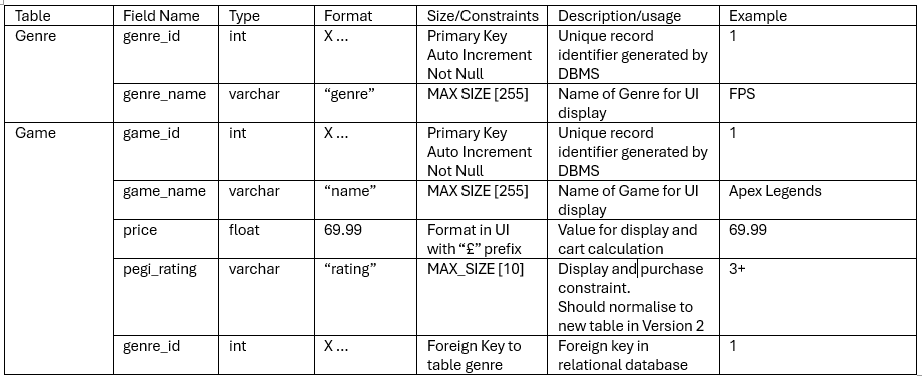
For the project you have to complete, you should be able to include this dictionary, regardless of any particular scenario or requirements. The is a dictionary structure that has been suggested in sample material published by Pearson. You will learn about the technical requirements for aspects like data types in your work for Task 2 of the project.

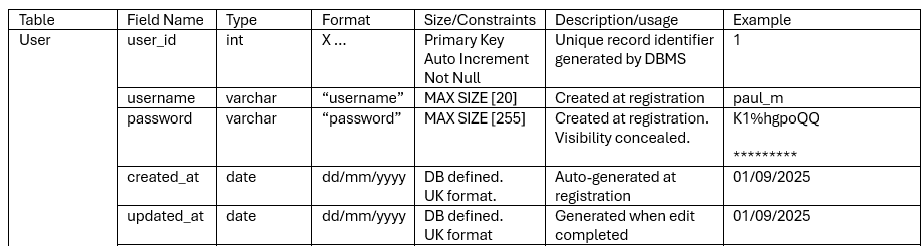
You must include more than 1 dictionary in the plan. Here's an example of dictionaries for 2 more database tables. The additional dictionaries will depend on the specific scenario the project is based on, so you can't fully plan these in advance.

This is in the same format as above.